


There is a lot of noise around AI right now. Every other post is about how someone’s automated a process, replaced a function or built a tool over the weekend. A lot of it is real. Plenty of it isn’t. And in among the noise, a lot of small and medium businesses are starting to feel like they need to be doing something with AI before they fall behind.
I see versions of this conversation regularly. Founders and managers asking what they should be using, what they should be automating, what tool to buy. The questions are sensible on the surface. They are also the wrong questions to start with.
The Hype Trap
The trap most SMEs are falling into is making tooling decisions before they have made strategy decisions. They read about a competitor using AI for sales outreach, or a SaaS product that promises to handle their internal admin, and they go shopping. None of that starts with the actual business or the actual problem.
The result is a stack of tools that don’t solve anything anyone needed solving, with people in the business spending their afternoons trying to make those tools fit workflows they were never designed for. The things that were genuinely painful are still painful, just with another subscription sitting on top.
Before you adopt anything, there are three questions worth sitting with.
First Question: What is actually painful in your business?
Be specific. Not “we want to use AI somewhere” but the actual pain. Your sales pipeline is opaque and you can’t see what is stuck. Your data exists but the reporting takes a week to put together. Customer support response times are slipping and renewals are suffering. Marketing content is bottlenecked on one person who is already stretched. Finance reconciliation is eating hours that should be spent elsewhere.
The test is straightforward. If you fixed this one thing, what would change for the business or the customer? If you can’t answer that clearly, the problem is not well enough defined yet to apply any tool to it, AI or otherwise.
Second Question: Is AI the right tool, or is the problem something else?
This is the one most SMEs skip. Just because something is painful doesn’t mean AI is the right answer, and just because something is painful doesn’t mean it isn’t. The real question is what kind of problem you are looking at.
If your reporting takes a week, sometimes the problem is the reporting itself and AI can probably help with it. Sometimes the underlying data is incomplete or unreliable, in which case AI cannot help, because it has nothing accurate to work from. The fix in that case is upstream, before any tool gets involved.
If your CRM isn’t being updated, AI tools can absolutely take some of that on now, listening to calls or parsing emails to keep records current. But if the pipeline structure itself is wrong, AI just populates a flawed structure faster.
If your support is slipping, AI can triage tickets and handle first-pass replies, freeing your humans for the harder cases. But if the underlying issue is the product itself generating an unsustainable complaint volume, AI is just hiding the symptom.
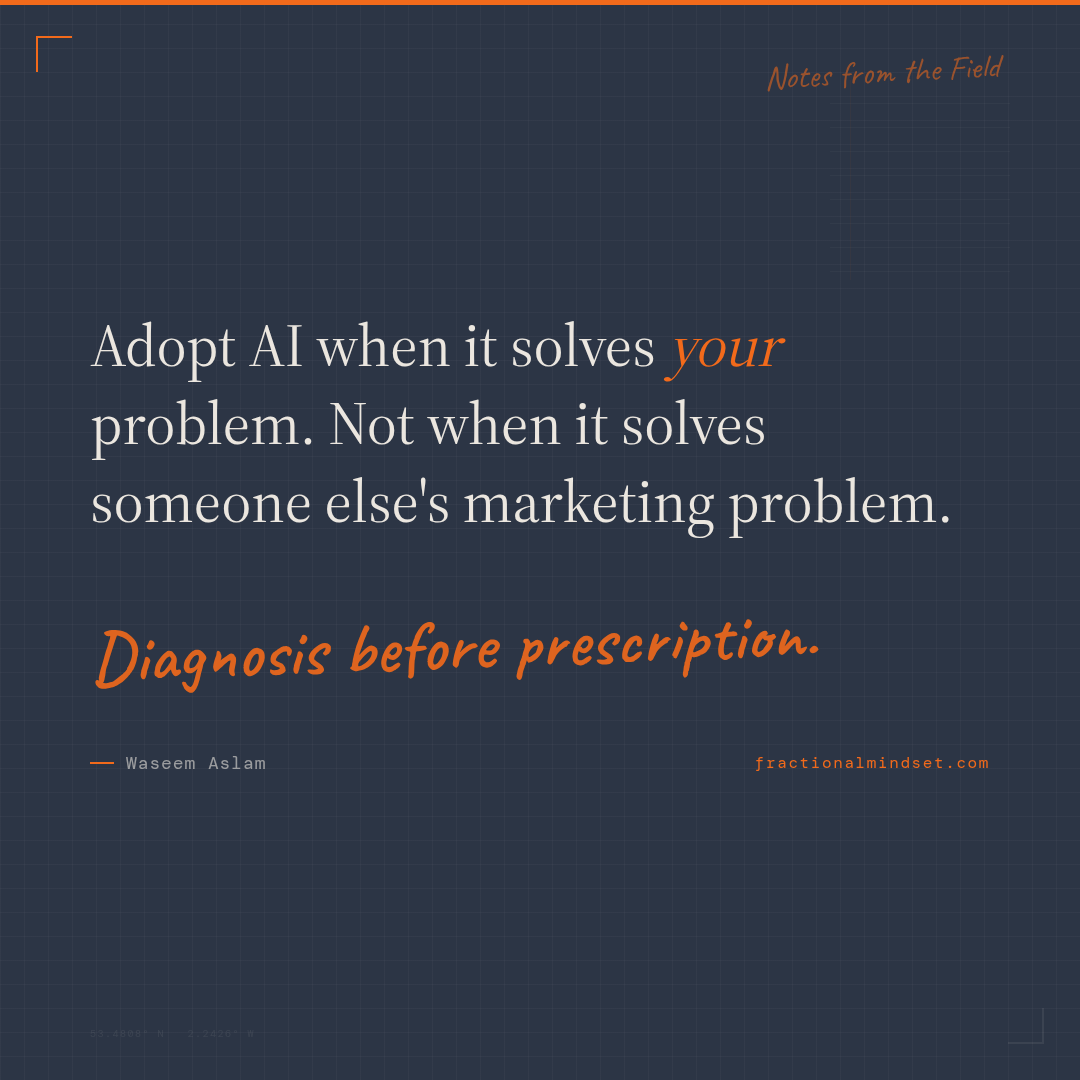
The diagnosis has to come before the prescription. Sometimes the right move is AI. Sometimes it is data quality, process discipline or hiring. Sometimes it is both. You need to know which kind of problem you have before you can pick the right answer.
Third Question: What does success look like for you?
This one sounds obvious until you try to answer it. Most SMEs end up quoting a metric they read in someone else’s case study. “We automated 30% of operations” is not a goal, it is a press release.
A real definition of success will be specific to your business. It might be that customer support response times halve or your team gets four hours a week back. It might be that your sales pipeline becomes clear enough that you can make a decision on a Monday morning that you couldn’t have made the week before. It might be that your content output goes up threefold without quality slipping. It might be that the finance close happens in two days instead of seven.
If you can’t describe what success looks like before you adopt the tool, you are going to end up chasing somebody else’s metric. And somebody else’s metric is rarely useful to you.
What Works for the SMEs That Get This Right
The SMEs I see getting AI adoption right tend to do four things. They slow down before they buy anything. They name the problem in plain English, and they check that the problem is actually worth solving. They check whether AI is the right tool for the job before assuming it is. And they define what success means in their own terms before they hand a budget to it.
That is not a glamorous list, and there is no software product you can buy that will give you any of those things. It is mostly a thinking exercise. A few hours of structured conversation with the right people in the room.
The Conversation Worth Having First
Before you talk to any vendor, agency or consultant about AI, do the homework yourself. List out the main pain points in the business, the things that are genuinely costing you time, money or customers. Get a feel of both the business and the people who actually do the work. Some of the most useful information comes from the people closer to the work, who know exactly where things break and why.
Once you have that picture, you can engage someone for the technical direction and strategy on how to solve those problems. The conversation goes very differently when you walk in with a clear list of what is actually painful and a sense of what success would look like, instead of walking in asking for “an AI solution” with no further detail.
The hype around AI isn’t going away, and your strategy doesn’t have to react to it. The right yardstick for your business is the one that fits your business and your customers.
Adopt AI when it solves your problem. Not when it solves someone else’s marketing problem.